


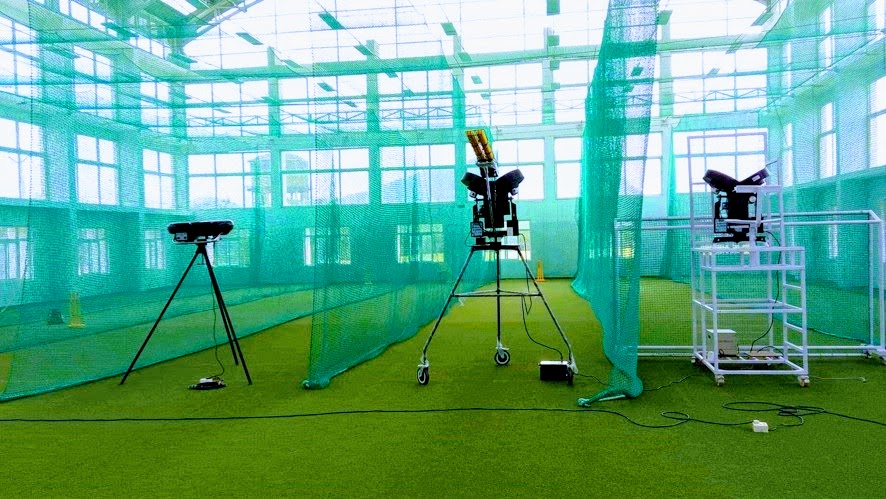
Understanding Cricket Bowling Machines: Your Digital Practice Partner
In the evolving landscape of cricket training, the cricket bowling machine has emerged as an indispensable tool for players at every level. Far from being a mere mechanical pitcher, these sophisticated devices simulate real-match bowling scenarios with remarkable accuracy, allowing batters to hone their skills systematically. Unlike human bowlers who fatigue, vary unintentionally, or have limited availability, bowling machines provide consistent, repeatable deliveries that accelerate skill development through focused repetition.
- Understanding Cricket Bowling Machines: Your Digital Practice Partner
- How Cricket Bowling Machines Transform Player Development
- Precision Repetition: Building Muscle Memory
- Safe Exposure to High-Pace Bowling
- Mastering Spin Through Simulation
- The Mental Game: Building Concentration and Decision-Making
- Choosing the Right Cricket Bowling Machine: A Buyer’s Guide
- Maximizing Your Bowling Machine Sessions: A Strategic Approach
- Integrating the Machine into a Holistic Training Regime
- Structured Drills for Specific Outcomes
- Common Mistakes to Avoid
- The Future of Cricket Bowling Technology
- Conclusion: The Indispensable Training Ally
The modern cricket bowling machine represents a fusion of engineering and sports science. Early models were simple catapult mechanisms, but today’s units feature programmable settings, variable spin, swing simulation, and digital interfaces. This technological leap means a club cricketer can now face virtual replicas of a world-class bowler’s delivery—be it a 90mph yorker, a deceptive googly, or a swinging bouncer—in their local nets.
How Cricket Bowling Machines Transform Player Development
Precision Repetition: Building Muscle Memory
The core benefit of any quality cricket bowling machine is its ability to deliver the exact same ball repeatedly. This allows batters to engrain technical adjustments into muscle memory. Want to work on your front-foot drive against full-length deliveries? A machine can provide fifty identical balls in succession, enabling focused correction of footwork, balance, and bat path. This targeted repetition is impossible with human bowlers, whose natural variation, however slight, introduces multiple variables.
Safe Exposure to High-Pace Bowling
For junior players or those moving up to senior cricket, facing genuine pace can be intimidating. Bowling machines allow a gradual, controlled exposure to higher speeds. Players can incrementally increase velocity as their confidence and reaction times improve, all within the safety of a predictable trajectory. This builds the neurological pathways needed to handle fast bowling without the psychological pressure of a menacing fast bowler running in.
Mastering Spin Through Simulation
Modern advanced machines can replicate off-spin, leg-spin, and even the mysterious doosra. They can adjust degrees of turn, bounce, and pace variation. For batters in countries where quality spin bowling is scarce, this is revolutionary. You can program a machine to mimic a specific bowler’s action and release, studying the ball’s behavior off the pitch repeatedly until reading spin becomes second nature.
The Mental Game: Building Concentration and Decision-Making
While a machine lacks a bowler’s psychological warfare, it trains a different mental skill: sustained concentration. In a match, a batter might only face a handful of balls from a key bowler. In a machine session, they might face 200 deliveries, training the mind to maintain focus ball after ball. Some interactive systems even use random sequence programming to prevent batters from anticipating the next delivery, sharpening reaction times and decision-making.
Choosing the Right Cricket Bowling Machine: A Buyer’s Guide
Key Features to Consider
When selecting a bowling machine, look beyond price and consider these critical elements:
- Ball Feed Mechanism: Horizontal wheel systems (using two counter-rotating wheels) are the gold standard for cricket, offering superior spin and swing control. Pneumatic (air-powered) machines are typically faster but may offer less spin variation.
- Programmability: Can you pre-set sequences of different deliveries (e.g., bouncer, length ball, yorker)? Random sequence functions are invaluable for realistic practice.
- Spin and Swing Capability: The best machines can impart genuine side-spin for leg breaks or off-breaks and can tilt to simulate conventional or reverse swing.
- Portability and Setup: Consider weight, wheel size (for moving over grass), and power source (battery vs. mains). Club machines need to be durable and relatively easy to move.
- Remote Control: A wireless remote allows the coach or the batter themselves to adjust settings on the fly, mimicking a change in bowling tactics.
Machines for Every Level and Budget
- Entry-Level/Club Machines: Brands like Bola and Huntly offer robust, simpler models ideal for club nets and schools. They provide consistent line, length, and pace, often with basic spin functions.
- Professional/High-Performance Machines: The Sidearm Sports Slinger (a manual but highly effective tool) and sophisticated wheel machines from RoboGolf (adapted for cricket) or Cricket Australia’s proprietary designs are used at academies and national setups. These offer extensive programmability and realistic ball flight.
Maximizing Your Bowling Machine Sessions: A Strategic Approach
Integrating the Machine into a Holistic Training Regime
A bowling machine is a tool, not a replacement for net practice against live bowlers. The key is integration. Use the machine for specific technical work—correcting a flaw, playing a particular shot, or facing a specific type of delivery. Then, take that adjusted technique into the live net to test it against the unpredictability of a human bowler.
Structured Drills for Specific Outcomes
- The Footwork Drill: Set the machine to a consistent good length. Focus exclusively on moving your feet decisively forward or back for 30 balls, without worrying about power.
- The Session Simulator: Program a 36-ball “spell” with randomized deliveries. Set a field in your mind and bat as you would in a match, scoring runs mentally.
- The Weakness Correction Drill: If you struggle with the short ball, set the machine to pitch just back of a length at chest height. Practice your defensive proc and pull/hook shots until your movement becomes automatic and confident.
Common Mistakes to Avoid
- Over-Reliance: Don’t use the machine exclusively. The “perfect” repetition can make batters robotic. Real cricket is about adapting to imperfections.
- Poor Setup: Ensure the machine is aligned correctly. A machine pointing slightly down the leg side will ingrain poor alignment. Always check its position relative to the stumps.
- Lack of Purpose: Don’t just “have a hit.” Every session should have a clear objective: “Today, I’m getting my head over my front knee when driving.”
The Future of Cricket Bowling Technology
The next generation of cricket bowling machines is already blending with virtual and augmented reality. Imagine facing a virtual representation of Jasprit Bumrah in a simulation that projects his run-up and release onto a screen, with the physical ball launching in perfect sync. Motion-sensor feedback is another frontier, where a system analyzes your shot in real-time and suggests adjustments.
Furthermore, data integration is becoming key. Machines will soon sync with wearable tech and bat sensors, providing instant feedback on backlift speed, point of impact, and shot power for each specific delivery type faced.
Conclusion: The Indispensable Training Ally
The modern cricket bowling machine is more than a piece of equipment; it’s a dedicated, tireless, and precise training partner. It democratizes high-quality practice, making the replication of world-class bowling accessible to anyone with a net. For the dedicated club player, it’s a chance to face more “deliveries” in one session than they might in a month of matches. For the professional, it’s a laboratory for solving specific technical puzzles.
Ultimately, the greatest value lies in its ability to bridge the gap between coaching instruction and match execution. By providing the consistent repetition needed to build skills, it allows players to walk onto the field with techniques hardened by thousands of deliberate, purposeful repetitions. In the relentless pursuit of batting excellence, the cricket bowling machine has secured its place as a cornerstone of intelligent, modern practice.
